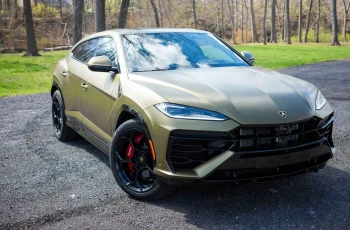
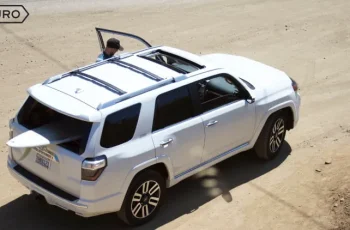
European cities and civil organizations have raised alarm bells over a recent trade agreement that could force the European Union to accept American vehicle safety and emissions standards that many in Europe see as weaker. In a joint letter dated October 20, more than 75 civil society groups and officials from cities including Paris, Brussels and Amsterdam urged EU decision-makers to reverse course. Their warning: adopting U.S. standards would degrade road safety, worsen air pollution, and endanger lives across the continent.

The Core of the Concern: Mutual Recognition of U.S. Standards
At the heart of the matter lies the Joint Statement on Trade agreed between the U.S. and EU on August 21, 2025, which declares that each side “intends to accept and provide mutual recognition to each other’s standards” in the automobile sector. Supporting this framework, U.S. vehicles meeting American safety and emissions rules would qualify for import into the European market—even if they don’t meet Europe-strict regulations.
The letter’s signatories argue that such a move is premature and dangerous. Europe, they say, has earned its reputation by pioneering robust standards—standards that pushed automakers to invest in advanced safety technologies, pedestrian protections, and stricter emissions controls. Accepting U.S. vehicles that do not meet the same bar, they insist, would erode decades of regulatory progress.
Safety at Stake: What Europe Would Lose
One of the strongest arguments in the letter is the historical record. According to data referenced by European groups, EU road fatalities fell by 36 percent between 2010 and 2021. In contrast, the U.S. had seen a 30 percent increase in road deaths over a similar period; pedestrian deaths rose by 80 percent, and cyclist fatalities climbed by 50 percent.
Europe credits its success to mandates such as automatic emergency braking, lane-keep assist, strong crash-energy zones, and regulations protecting pedestrians from aggressive front-end designs. These measures have been built into new vehicles sold in the EU for years.
By contrast, the U.S. has traditionally granted automakers more leeway. The letter warns that lowered European standards would invite more bulky U.S. SUVs and pickup trucks onto European streets—vehicles that tend to be heavier, higher riding, and more dangerous to vulnerable road users in collisions. In mixed traffic, these vehicles could increase the risk not only to pedestrians and cyclists, but also to drivers of more modest European models.
The result: more severe crashes, more injuries, more deaths.
Pollution and Public Health: The Hidden Toll
Safety is only part of the equation. The letter also warns that relaxing emissions and pollution standards would worsen public health in European cities. While Europe is preparing to regulate pollutants from brake and tire wear by 2026, the U.S. is simultaneously weakening rules on vehicle emissions. In July 2025, for instance, the U.S. Environmental Protection Agency proposed reversing its 2009 “endangerment finding” — a legal basis for regulating greenhouse gases from cars and power plants.
If finalized, that rollback would dismantle emissions ceilings in America, and imported U.S. cars could bring higher levels of greenhouse gases and air pollution into Europe. The signatories caution this would expose Europeans to known risks associated with fine particulates and chemical pollutants—such as asthma, cardiovascular disease, neurological disorders, and cancer.
Economic and Industrial Risks: Shifting Jobs, Shifting Profits
Beyond the human cost, the letter argues that aligning with U.S. regulations would also threaten Europe’s industrial base. Automakers may find it more cost-efficient to consolidate production under U.S. rules, then export back into Europe under the mutual recognition framework, bypassing stricter EU requirements.
That would accelerate job losses—not only in manufacturing plants but across the supply chains, including firms that produce safety systems, emissions sensors, and European-market parts. The risk: hollowing out Europe’s competitive advantage in automotive technologies and innovation.
Infrastructure, Driving Patterns, and Geography
One element the letter alludes to—though not in detail—is the fundamental difference in roads, urban layouts, and driving culture between Europe and the U.S. European cities are typically denser, with narrower lanes, more mixed traffic (cars, bikes, pedestrians), and more frequent intersections. Defensive design and safety margins in vehicles are optimized to suit these conditions.
By contrast, American roads often emphasize higher speeds, wider lanes, and lower densities. Accepting U.S. vehicles built for those environments may misalign with European infrastructure and design assumptions, further magnifying safety risks. Structural differences in crash patterns and collision angles call for vehicles engineered to specific regional norms.
The Stakes in Brief
To sum up, the letter warns that accepting U.S. vehicle standards would:
- Reverse gains in safety by undoing requirements for autonomous braking, pedestrian protection, and crash-safe design
- Permit heavier, more aggressive vehicles onto European roads, endangering vulnerable road users
- Elevate pollution levels, undermining European public health and climate goals
- Undermine Europe’s automotive ecosystem, accelerating job losses and technological flight
- Create a mismatch with European infrastructure and traffic conditions
The signatories stress that a “hastily agreed” trade deal that weakens these protections would have profound consequences—not just economic and industrial, but human.
A Balanced Path Forward
While the principle of regulatory harmonization has appeal—after all, reducing technical barriers to trade is a standard objective—it cannot be pursued without acknowledging deep asymmetries between the U.S. and Europe.
Rather than blanket mutual recognition, a phased, conditional approach could preserve crucial protections. Europe might insist that any U.S. vehicle entering its market must comply with core safety and emissions elements, even if minor differences are tolerated. Or the EU could carve out special conditions for vehicles imported under this trade agreement, with additional oversight or certification.
Moreover, the EU should map out which standards are non-negotiable—for instance, pedestrian safety, lane-keep, crash zones—and refuse to relinquish those. At the same time, diplomats could negotiate a transitional period, during which automakers adapt to higher European requirements. Meanwhile, cities and civil society must remain vigilant.
Final Word
The open letter issued by European cities and numerous civil organizations serves as a sharp warning: accepting lower U.S. vehicle standards is not merely a regulatory shift—it is a potential public health and safety rollback. Europe’s decades of progress in reducing road deaths, controlling emissions, and nurturing a high-tech auto industry are at stake.
Whether the EU will heed the warning and adjust its trade approach remains to be seen. But one thing is clear: any move to allow U.S. vehicles that fall short of European safety and emissions norms would carry heavy risks—for lives, for air, and for Europe’s industrial soul.